
Course: Marine Science IGCSE

Cambridge International (0697) | Online | Taught by a Working Marine Scientist

A Qualification With Real-World Roots

The Cambridge IGCSE Marine Science (0697) is one of the most fascinating qualifications available to 14–16 year olds — and one of the best-kept secrets in international education. Almost nobody teaches it, which is a shame: it covers the ocean the way scientists actually study it — geology, chemistry, biology, ecology, human impact. Pollution, overfishing, habitat destruction — not headlines, but systems students learn to actually explain. Real science, not surface-level stuff. 

It’s also a young exam, first sat in summer 2024, examined in both the May and November series and 
graded A* to G — so it fits around the student, not the other way round, and feeds straight into AS and A Level Marine Science.

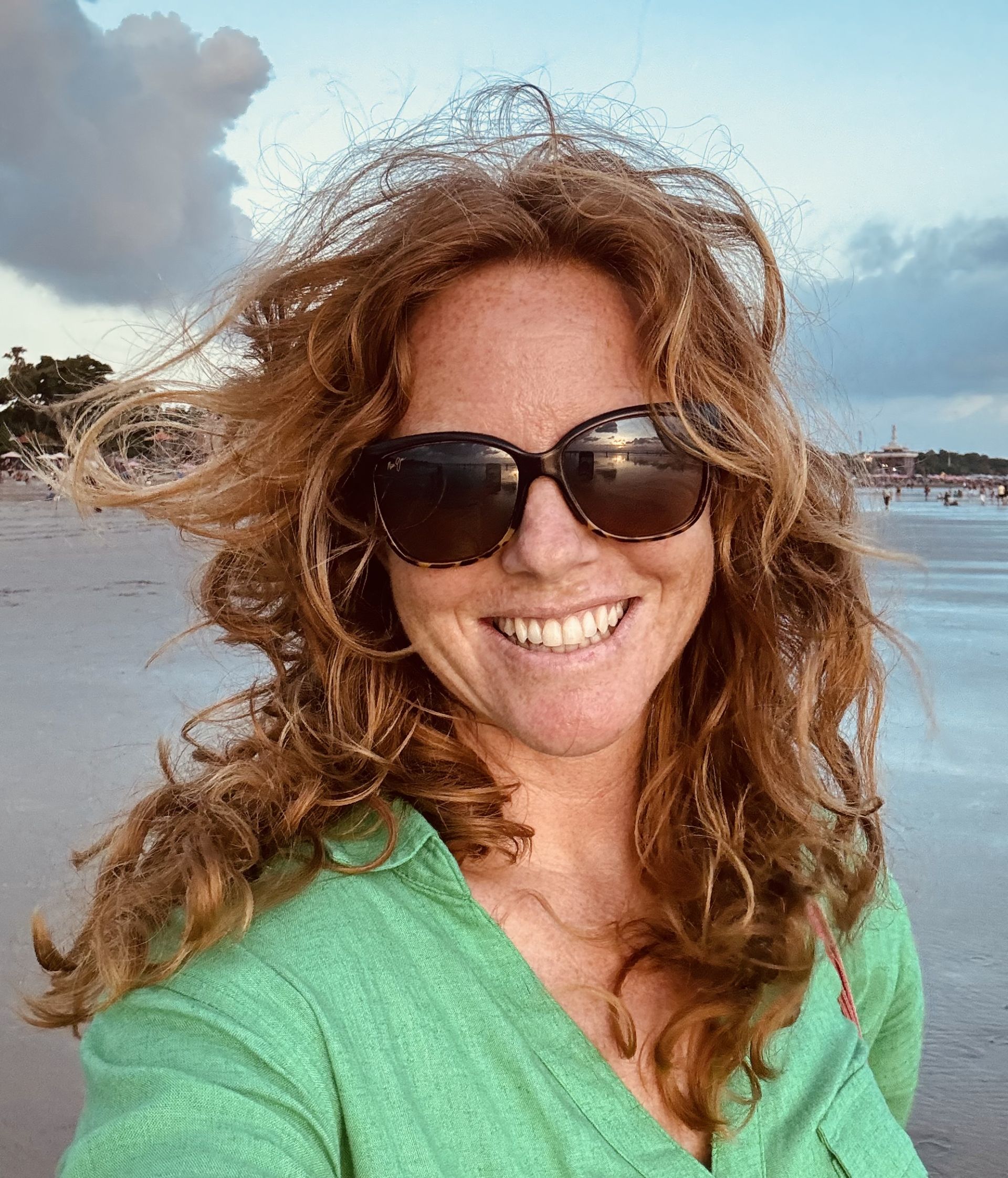
Here’s what makes Big Blue Education’s version different: your teacher has spent 25 years actually doing this work — Reef Check surveys in Indonesia, sea turtle monitoring in Mexico, running dive operations across the Seychelles, the Caribbean and the Pacific. When she teaches coral bleaching, she’s describing reefs she’s surveyed herself. The syllabus is the same one every provider teaches.

What’s teaching it to you isn’t.

This Course Is Perfect For…

  • Students who are curious about the ocean and want a qualification that reflects that passion.
  • Home-educated learners looking for a rigorous, internationally recognised science IGCSE.
  • Students in international schools or expat families who need the flexibility of online learning.
  • Anyone considering a future in marine biology, conservation, environmental science, aquaculture or ocean research — or who just wants to do something they’re actually interested in.

    There are no previous entry requirements for this course. If you have a reasonable level of English and a curiosity about the sea, that’s enough to get started.
 SYLLABUS

Six Units. One Ocean.

01.

Earth & Its Oceans

Where did the oceans come from? What’s underneath them? Plate tectonics, ocean geomorphology, tides, currents, tsunamis. The geological foundation before the biology kicks in.
02.

Seawater

The chemistry and physics of the ocean itself. Salinity, temperature, density, light penetration. Sounds dry (it isn’t). This is the stuff that determines what can live where — and why.
03.

Marine Organisms

 From microscopic plankton to apex predators. How marine life is classified, how it functions, and why ocean ecosystems are as extraordinary as they are. This unit tends to be the one students talk about most.
04.

Nutrients & Energy

Food webs, nutrient cycles, how energy moves through the ocean. The mechanisms that keep the whole thing functioning. More interesting than it sounds on paper, considerably.
05.

Marine Ecology

Coral reefs, mangroves, open ocean, deep sea. Each habitat explored in depth — what lives there, why, and how the relationships between species work. The ecology unit is where a lot of students start to properly fall for the subject.
06.

Human Impacts

Where science meets responsibility. Pollution, overfishing, climate change, ocean acidification. The bit that makes it matter beyond the exam. Students finish this unit knowing not just what’s happening to the ocean, but why it’s happening and what the science says about addressing it.

Real Teaching. Real Science.
Completely Online.

Big Blue Education isn’t a video library you subscribe to and forget. Every lesson is put together personally by Joanna — a marine scientist with 25 years of experience in the water and the classroom.
Videos, practicals, notes, quizzes, exam questions, case studies and podcasts — that move through the course material, bringing it to life in manageable sections.

What a Typical Week Looks Like
  • 2 x online sessions (45–60 minutes each)  watching videos and completing quizzes/assessments on the learning platform.
  • Independent study tasks between sessions — reading notes, practice questions, past paper work.
  • Teacher-marked assignments with feedback, not just grades.
  • Regular progress review so you always know exactly where things stand.
  • No fixed start dates — begin when you’re ready.
  • No fixed lesson times — scheduled around your family, your time zone, your life.
  • Up to 24 months to complete the IGCSE — or fast-track to a specific exam series.

Built Around Real Life

Big Blue Education students are spread across the globe — in Spain, the Caribbean, Southeast Asia, the UK, the Middle East and beyond. Some are home-educated full-time. Some are at international schools and adding Marine Science as an extra qualification. Some are fitting study around competitive sport, family travel, or other commitments.

The course works for all of them because it’s designed to flex. Session times are entirely up to the student. There are no terms, no compulsory assemblies, no fixed academic year. The structure is entirely in service of the student.

The Most Personal Possible Education

In a class of twenty, a teacher can’t adapt to every student in every session. In an online course, every session is adaptable. If a student grasps Module 2 quickly, they move on. If Module 4 needs revisiting three times, it can be revisited three times. The pace is always right, because the pace is always yours.


This matters especially in Marine Science, where genuine curiosity varies enormously. Some students arrive fascinated by ecology and need extension work. Others come from a maths-science background and need more biology support. Some have been diving since they were ten; others have never seen the sea. Online learning handles all of this in a way no group class can.


And then there’s the tutor. Big Blue Education isn’t staffed by a rotating team of generalist teachers. Joanna is a marine scientist with a BSc, a Masters in Oceanology, decades of in-water experience, and a genuine passion for the subject. Students aren’t just learning the syllabus — they’re learning from someone who has actually done it.

What You Actually Need

Less than you’d think. No specialist software. No expensive equipment. Just:

  • A reliable internet connection
  • A computer, laptop, or tablet (a smartphone can work for some tasks)
  • A reasonably quiet study space for live sessions

    All course materials are provided digitally. If you’d like physical textbooks in addition, we can provide ISBN numbers for purchase.


Always Knowing Where You Stand
Parents and students receive a progress report at the end of each module, covering the topics covered, assessment performance and areas for development. There are no surprises at exam time — because we track progress continuously, not just at the end.

Parents are always welcome to request a direct call with Joanna. We work as a team — tutor, student, and family — towards the same goal.

The Exam, Demystified

Exam logistics can feel overwhelming — especially if you’re home-educating, studying internationally, or navigating this for the first time. Here’s everything: what the exam looks like, when and where it’s sat, how to find a centre, and how we help.

Exam FAQs

Pricing & Enrolment

Course fee: [TBC]
Created with